A Florida Gutter Checklist for Every Season Near Gainesville
@landenecwl891
October 18, 2026 · 13 min read
Living near Gainesville means your gutters do not get an off-season. The weather shifts, but the job stays the same: move roof runoff away from the house, keep water from pooling where it should not, and protect the yard from erosion and washouts. In this part of Florida, that matters more than many homeowners realize. Summer thunderstorms can dump water fast. Tropical weather can test every weak point in a drainage system. High humidity helps debris stay damp and compacted, which turns a small clog into a heavy, stubborn blockage.
A lot of people think of gutters as a simple add-on, something you only notice when they overflow over the front entry or drip on guests heading in from the driveway. In practice, they play a big role in how water behaves around the house. University guidance in Florida has long emphasized directing downspouts toward lawn or planted areas, or other places that can absorb water, rather than letting runoff rush across hard surfaces or pool against the foundation. That one principle shapes almost every good gutter decision, whether you are maintaining an older setup or planning a new one.
Near Gainesville, a smart routine is not about doing one giant cleanup once a year. It is about watching the system in smaller, well-timed passes, because Florida weather gives you several different kinds of stress over twelve months. If you want a practical year-round gutter checklist Florida homeowners can actually use, it helps to think in seasons, not just in symptoms.
Why Florida gutters demand more attention than people expect
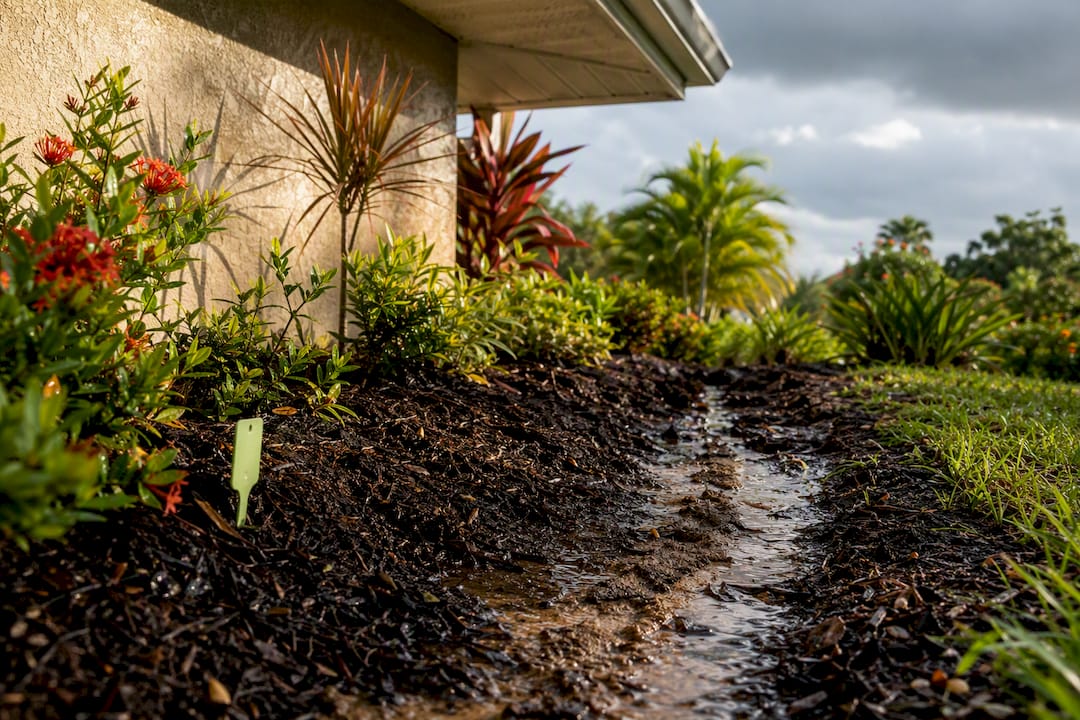
Roof runoff moves quickly in Florida storms. Sandy soils can absorb a lot, but they can also let water rush through certain areas while carving channels in others. A downspout that dumps too close to the house can contribute to pooling near the foundation. It can also create damp, pest-friendly spots. A downspout aimed across a bed can beat mulch flat and expose roots after a few heavy storms. Around lanais and screened enclosures, poor drainage can turn outdoor spaces into a mess of splashback and soggy edges.
That is why the question is not simply whether you have gutters. It is whether the water ends up in the right place after it leaves them.
For many homes, the best target is a lawn area, planting bed, rain garden, rain barrel, cistern, or another pervious space that can slow and absorb runoff on site. That keeps with Florida-friendly landscape principles and helps reduce erosion and stormwater problems. It also makes maintenance easier to judge. If the water is landing where it should, you see fewer mystery puddles, fewer muddy streaks, and less washout after a storm.
Late winter and early spring, reset the system before storm season
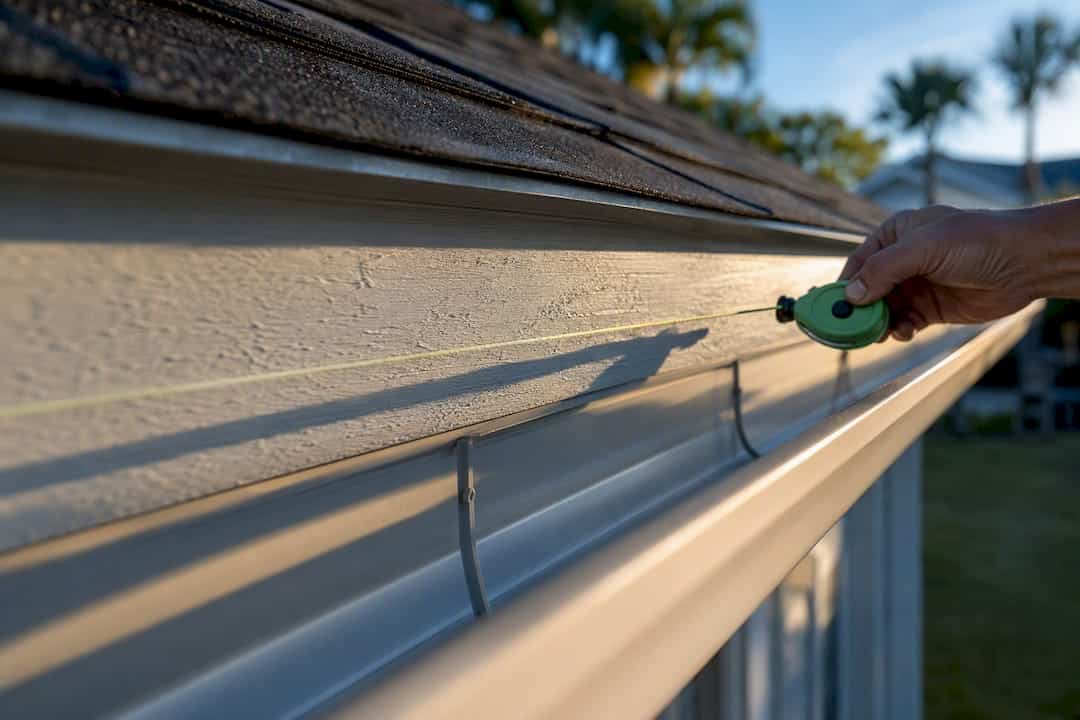
This is the most underrated gutter season in North and Central Florida. People are not thinking about tropical weather yet, but this is the time to catch the quiet problems. A loose section, a clogged outlet, or a downspout that drifted out of position may not seem urgent on a dry week in March. It feels very urgent in July.
Start with a slow walk around the house after a regular rain. Not a dramatic storm, just enough water to show you how the system behaves. Watch where the downspouts discharge. If water is backing up, spilling over edges, or dropping too close to the house, that is your first clue that cleaning or repair is overdue. This is also a good time to notice whether a bed has been getting hammered or whether a turf area is staying soggy longer than it should.
If you are comparing improvements this time of year, this is when homeowners often begin asking about gutter installation cost factors Florida contractors consider. The answer is rarely one thing. The size and shape of the roofline matter. The number of corners and downspouts matter. Accessibility matters. Material choices matter. So does how much drainage correction is needed at ground level. A house that already sends water to good pervious areas is usually simpler to plan for than one where every downspout is currently dumping into a hardscape bottleneck.
People also start thinking about appearance in spring because they are outside more. Gutter colors for Florida homes can be a bigger discussion than expected, especially in neighborhoods with an HOA or architectural review process. Florida law gives associations authority over exterior appearance standards, including color and style specifications tied to exterior products, but those standards still have to comply with building code and cannot be used to deny conforming installations outright. In plain terms, color review may be part of the process, but it should not distract from the drainage job the system needs to do.
Before summer storms arrive, use a short inspection routine
This is the one checklist I tell homeowners to keep handy on their phone. It is short enough to use and specific enough to catch problems before the weather gets serious.
- Check that each downspout sends water away from the house and into lawn, beds, or another pervious area that can absorb runoff.
- Look for overflow marks, soil washout, or mulch displacement beneath gutter edges and downspout outlets.
- Remove visible leaf litter and debris from gutters and downspout openings so water can move freely.
- Watch one rainfall from start to finish and note any section that drips, backs up, or spills over.
- Confirm that drainage near patios, entries, and pool areas does not create slippery or muddy spots.
That last point matters more than it sounds. Many outdoor living spaces near Gainesville are used year-round, even if not every week. If water is pouring where people walk, stand, or open doors, you do not just have a gutter issue. You have a safety and usability issue.
Summer is where small gutter mistakes become expensive annoyances
Once the daily rains settle in, your gutter system either works or it advertises every flaw. This is the season when overflow can dig trenches beside planting beds, splash mud onto walls, and leave saturated strips along the foundation. It is also when a partly blocked system becomes much heavier. Wet debris packs down. Water lingers. Joints and hang points feel the strain.
Summer is when the DIY gutter cleaning or hire a pro debate tends to come up. There is no one answer that fits every house. A simple one-story run that is easy to access and lightly clogged may be reasonable for a careful homeowner. A taller home, a tricky roofline, or a system that is already leaking or sagging is a different story. Once repair enters the picture, the cleaning decision changes. A lot of people go up to clear leaves and only then notice a loose section or a damaged outlet. At that point, the job is no longer just about debris.
I have seen homeowners focus so hard on the gutter trough that they forget to test the downspouts. Then the next storm comes, and the water still erupts over the top because the blockage was packed farther down. In Florida humidity, decomposing debris can be dense and messy, not the dry, easy scoop people imagine from a fall cleanup up north.
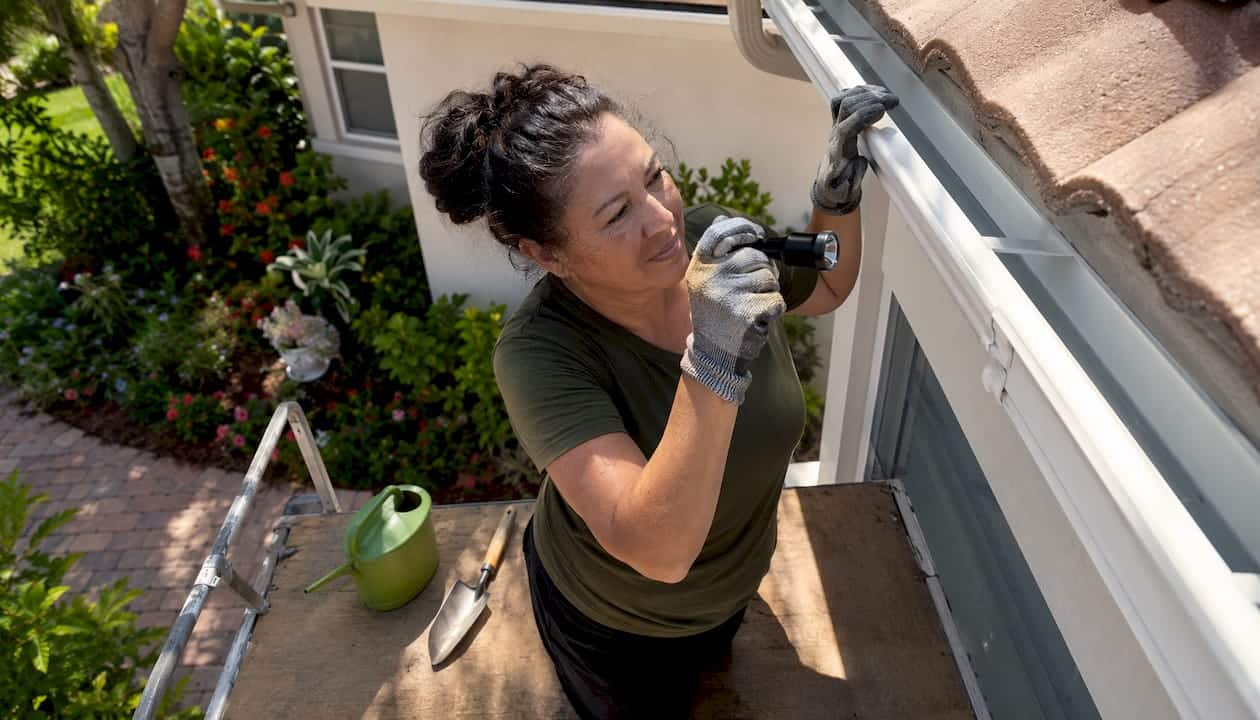
This is also the season when gutter myths Florida homeowners hear from neighbors start circulating again. One common myth is that if water is moving off the roof somehow, the system is doing its job. Not true. Water that exits in the wrong place can be every bit as damaging view page as water that never entered the gutter. Another myth is that landscaping alone will solve a drainage problem. Plants help, and planted areas are excellent discharge zones when used properly, but they do not fix an overflowing gutter or a downspout aimed at the foundation. A third myth is that maintenance can wait until something stains the fascia. By then, the system has usually been struggling for a while.
Homes with pool enclosures need extra judgment
Gutter drainage for pool cages deserves its own conversation because these spaces change how runoff behaves around the house. The goal is still the same: direct roof water into areas that can absorb it without causing erosion or creating a sloppy perimeter. The challenge is that screened enclosures, decks, and surrounding hard surfaces can leave fewer forgiving places for water to go.
You do not want roof runoff carving out the edge of a patio slab or dumping into a narrow strip where soil washes away after every storm. You also do not want water splashing back into an outdoor seating area or tracking muddy runoff where people walk barefoot. Around pool-adjacent spaces, the best gutter planning is usually less about the gutter itself and more about where the downspouts discharge and how that water spreads once it hits the ground.
That is where observation pays off. After a storm, walk the outside edge of the pool area. Look for scoured mulch, exposed roots, and places where runoff is cutting a visible path. If a screened area stays messy long after rain, it is worth checking whether the problem starts higher up at the roof edge.
Fall is not leaf season in the northern sense, but it still matters
Florida does not follow the classic seasonal script, yet fall is still a useful checkpoint. By this point, the system has had a full summer of hard use. If something loosened, clogged, or shifted, you have probably seen signs of it. This is a good moment to clean, inspect, and decide whether a small repair now can save you frustration later.
That might mean routine gutter cleaning Dunnellon FL homeowners schedule before holiday guests arrive, or a targeted gutter repair Hawthorne FL residents address after repeated overflow near a side yard. The town names change, but the pattern is familiar across this region: if the wet season exposed a weak spot, fall is a practical time to fix it while conditions are usually easier to manage than during a run of summer storms.
For homeowners considering upgrades, this is also when products like gutter guards Mount Dora FL companies market start getting serious attention. The appeal is easy to understand. Nobody loves cleaning gutters in humid weather. Still, it helps to stay realistic. Any product decision should be judged first by how well it supports reliable drainage and maintenance access. A cover or guard that reduces visible debris can still require routine attention, especially in a climate where organic matter stays wet and compacted. The name of the product should never replace inspection.
Metal roofs, seamless systems, and other common upgrade questions
Florida homeowners who are improving a roof often revisit the gutter system at the same time. That is especially true when people ask about gutters for metal roofs Florida homes increasingly use. The principle does not change: water still needs to be collected and sent away from the house into an area that can absorb it. What matters most is how the entire roof drainage setup performs during real rain, not how tidy it looks on installation day.
The same goes for seamless gutters Williston FL contractors may offer as part of a replacement project. Homeowners often like a cleaner appearance and fewer interruption points along long runs, but the larger truth is simpler. Any gutter system has to be maintained, and any gutter system should be judged by drainage performance, outlet placement, and whether it protects the house and landscape from runoff problems. A neat line along the fascia is nice. A dry foundation edge after a storm is better.
When people ask me whether a new system is worth it, I usually steer the conversation away from sales language and back to symptoms. Are you dealing with recurring overflow? Is runoff pooling near the house? Are beds eroding or outdoor spaces getting drenched? If the answer is yes, the system may need more than another cleaning.
The repair signs homeowners should not ignore
Some problems are mild enough to watch for a few weeks. Others deserve prompt attention because the next storm will make them worse. The trick is knowing the difference. A little staining beneath a gutter edge after a windy storm may just mean debris redirected water briefly. Repeated pooling beside the foundation is not minor. Neither is a downspout that discharges where soil is already washing out.
Use this short rule of thumb when deciding whether to keep troubleshooting on your own or bring in help.
- Call for repair if water repeatedly pools near the foundation or beside the house after rain.
- Get a closer inspection if gutters overflow even after obvious debris has been cleared.
- Address loose or shifted downspouts before the next heavy storm redirects runoff into problem areas.
- Take erosion around beds, walkways, patios, or pool-adjacent spaces seriously, because runoff rarely fixes itself.
This is usually the point where homeowners sort out the DIY gutter cleaning or hire a pro question for good. Cleaning is one type of task. Diagnosing drainage behavior is another. Once water movement at ground level becomes the issue, you are looking at a house-and-landscape problem, not just a gutter trough full of leaves.
Winter is for planning, not forgetting
Near Gainesville, winter can tempt people to stop paying attention because the daily storm pressure eases. That is understandable, but it is also when the best long-term decisions get made. If you spent the rainy months putting buckets under problem spots or re-spreading mulch after every storm, write down what happened while it is still fresh. Which downspout caused trouble? Which bed kept washing out? Where did water collect after a normal shower?
That record helps if you are budgeting for improvements. It also helps when you start comparing proposals and trying to understand gutter installation cost factors Florida homes actually face. Price is not only about footage. It is about solving the right problem. A cheaper fix that leaves runoff dumping at the base of the house is not cheaper for very long.
Winter is also a practical time to check neighborhood requirements if you are changing exterior colors or visible components. If your community reviews exterior details, deal with that paperwork early rather than letting a drainage issue linger into the next wet season.
The real goal is not cleaner gutters, it is better water control
This is where many homeowners get tripped up. They think success means the gutters look clean from the driveway. That is nice, but it is not the whole test. The real test is what happens when Florida rain hits the roof hard and fast. Does the system capture the runoff? Does it move it away from the house? Does it discharge into a space that can absorb it without causing erosion, puddling, or a mess around daily living areas?
If the answer is yes, you are on the right track.
A good seasonal routine near Gainesville is not complicated. Check before storm season. Watch the system during summer rains. Correct drainage issues that show up around foundations, beds, and outdoor spaces. Revisit repairs in fall. Plan upgrades in winter. That rhythm is far more useful than waiting for a dramatic failure.
For most homes in this part of Florida, gutters are not a set-it-and-forget-it feature. They are part of your stormwater plan, whether you have thought of them that way or not. When you treat them like that, maintenance decisions get clearer. You stop asking only, “Are the gutters full?” and start asking the better question: “Where is all this water going?”
That one question will guide nearly every smart decision you make, season after season.